Checking a bag adds time, stress, and cost to every trip. Between baggage fees, the risk of lost luggage, and the wait at baggage claim, traveling with only a carry-on eliminates these headaches. Packing light gives you freedom to move quickly through airports, flexibility to catch earlier flights, and peace of mind knowing your belongings stay with you.
Learning how to pack your carry-on efficiently opens up a new way of traveling. Whether you’re gone for a weekend or two weeks, a well-planned carry-on contains everything you need.
Below, we’ll cover everything from carry-on regulations to how to pack for success — plus a carry-on packing list you can use to make sure you don’t forget anything (and don’t pack things you won’t need).
Understanding Airline Carry-On Size Restrictions
All airlines allow for one carry-on bag that fits into the overhead compartment and a personal item that you can fit under the seat in front of you. But, before packing anything, you’ll want to verify your airline’s specific carry-on dimensions. Carry-on size limits vary significantly between regions and airlines, and bringing an oversized bag can result in unexpected fees or forced gate checking.
- U.S. domestic flights: Most U.S. carriers allow bags up to 22 inches x 14 inches x 9 inches (56cm x 36cm x 23cm). Budget airlines may enforce smaller limits and charge fees for bags that exceed their restrictions.
- International and European flights: Airlines outside the U.S. typically enforce smaller size limits of approximately 21.5 inches x 15.5 inches x 9 inches (55cm x 40cm x 20cm). European budget carriers like Ryanair and EasyJet have even stricter requirements, often limiting free cabin bags to 15.7 inches x 9.8 inches x 7.9 inches (40cm x 25cm x 20cm).
- Weight restrictions: U.S. domestic airlines rarely enforce carry-on weight limits, but international carriers strictly limit cabin baggage to 15-22 pounds (7-10kg). Airlines in Asia and Australia commonly restrict carry-ons to just 15 pounds (7kg), including your personal item.
Measure your bag before heading to the airport, as gate agents may force you to check oversized luggage at the last minute. If you travel internationally frequently, consider purchasing luggage that meets the more restrictive international standards (around 21.5 inches tall) rather than the larger U.S. domestic size.
What Cannot Go in a Carry-On Bag
TSA regulations prohibit certain items from carry-on luggage to maintain cabin safety. Understanding these restrictions prevents delays at security checkpoints.
Prohibited carry-on items include:
- Sharp objects: Knives, box cutters, scissors over 4 inches, razor blades (safety razors with enclosed blades are allowed)
- Tools: Wrenches, screwdrivers, hammers, and other tools over 7 inches
- Sporting equipment: Baseball bats, golf clubs, ski poles, hockey sticks
- Firearms and ammunition: All guns, including replicas and toy weapons
- Self-defense items: Pepper spray, mace, stun guns, martial arts equipment
- Flammable items: Lighter fluid, gasoline, fireworks, flares
- Liquids over 3.4 ounces: Must follow the 3-1-1 rule (more on this below)
The 3-1-1 liquids rule requires all liquids, gels, aerosols, creams, and pastes in carry-on bags to be in containers of 3.4 ounces (100ml) or less. All containers must fit in a single quart-sized, clear plastic bag. Medically necessary liquids are exempt but should be declared at security.
It’s important to note that shaving cream counts as liquids under TSA rules.
When in doubt about a specific item, check the TSA’s Complete List of what you can bring.
How to Pack Following The 5-4-3-2-1 Packing Method
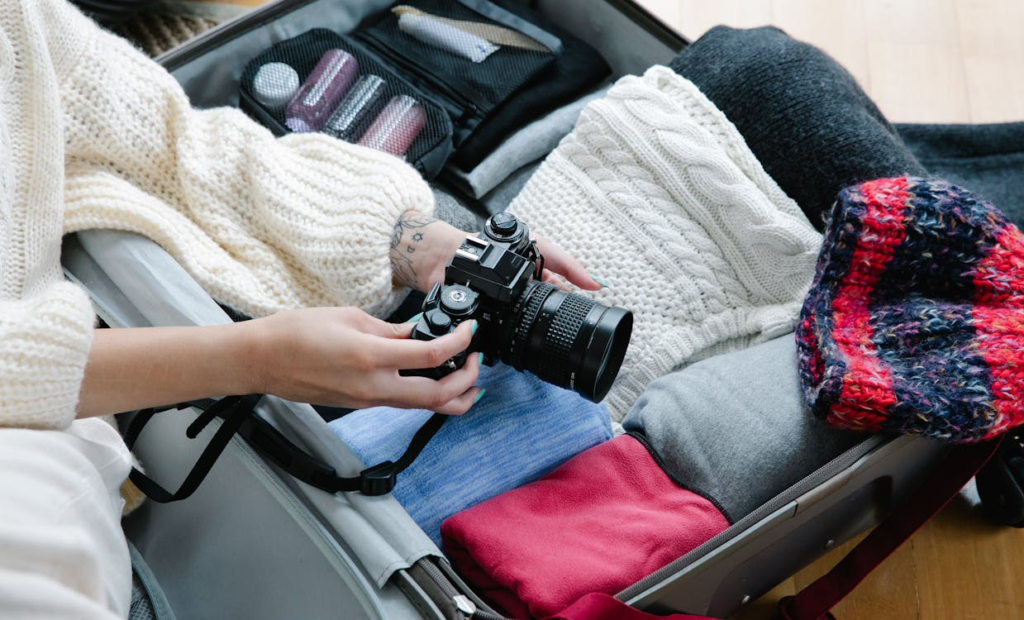
The 5-4-3-2-1 packing method provides a simple formula for building a versatile travel wardrobe that fits in a carry-on. This approach was initially popularized by travel bloggers who needed to pack efficiently for extended trips while maintaining style options, and has become an essential rule of packing a carry-on.
The basic 5-4-3-2-1 formula:
- 5 tops: Mix of short-sleeve, long-sleeve, and layering pieces
- 4 bottoms: Pants, shorts, skirts, or a combination based on your destination
- 3 pairs of shoes: One comfortable walking pair, one dressier option, one activity-specific (or wear your bulkiest pair during travel)
- 2 dresses or special outfits: Can be swapped for activewear, swimsuits, or cold-weather accessories depending on your trip
- 1 set of accessories: Bags, jewelry, scarves, hats, or other items that complete your outfits
By following this method, you’ll effectively pack 20 possible outfit combinations. Add accessories and layering pieces, and you have enough variety for trips lasting one to three weeks.
This formula also adapts to any trip type. For winter travel, swap dresses for a heavy coat and cold-weather accessories like scarves and gloves. For beach vacations, replace one dress with swimwear. Business travelers might adjust to 3 tops, 2 bottoms, and 2 blazers instead.
The key is choosing pieces in a coordinated color palette so everything works together. Stick to neutrals like black, navy, gray, or beige as your base, then add one or two accent colors. This ensures every top matches every bottom without requiring extensive planning each morning.
The Essential Carry-On Packing List
Use this comprehensive packing list for your carry-on as a foundation, modifying based on your destination and trip length.
Clothing:
- 5-7 sets of underwear
- 5-7 pairs of socks
- 5 tops (mix of short and long sleeves in coordinating colors)
- 4 bottoms (pants, shorts, skirts that match your tops)
- 1-2 dresses or special outfits
- 1 layering piece (cardigan, jacket, or blazer)
- 2-3 pairs of shoes (wear your bulkiest pair while traveling)
- Sleepwear
- Swimwear (because you never know!)
Toiletries (all liquids 3.4 oz or less in one quart-sized bag):
- Toothbrush and travel-sized toothpaste
- Deodorant (solid doesn’t count toward liquid limits)
- Shampoo and conditioner (or solid bars)
- Face wash and moisturizer
- Sunscreen
- Razor
- Contact lenses/glasses and solution
- Medications in original containers
- Basic first aid (band-aids, pain reliever, antibiotic ointment)
Electronics:
- Smartphone and charger
- Portable power bank
- Universal travel adapter (for international trips)
- Headphones (noise-canceling are always recommended)
- E-reader or tablet
- Laptop (if needed) with protective case
- Camera (optional)
- Electronics organizer pouch for cables
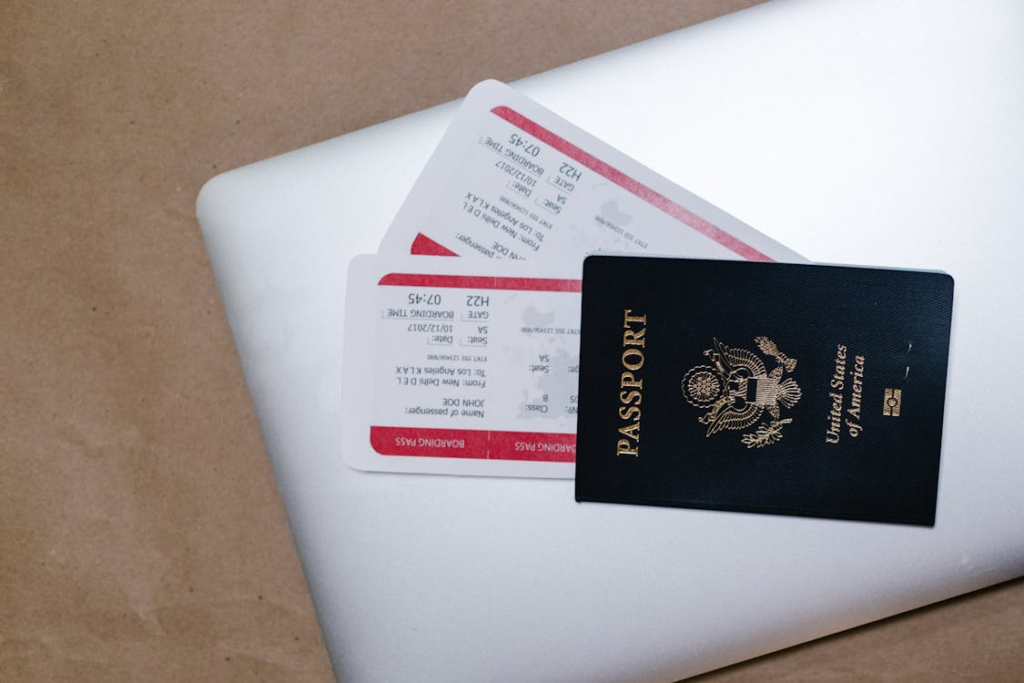
Documents (always keep in personal item):
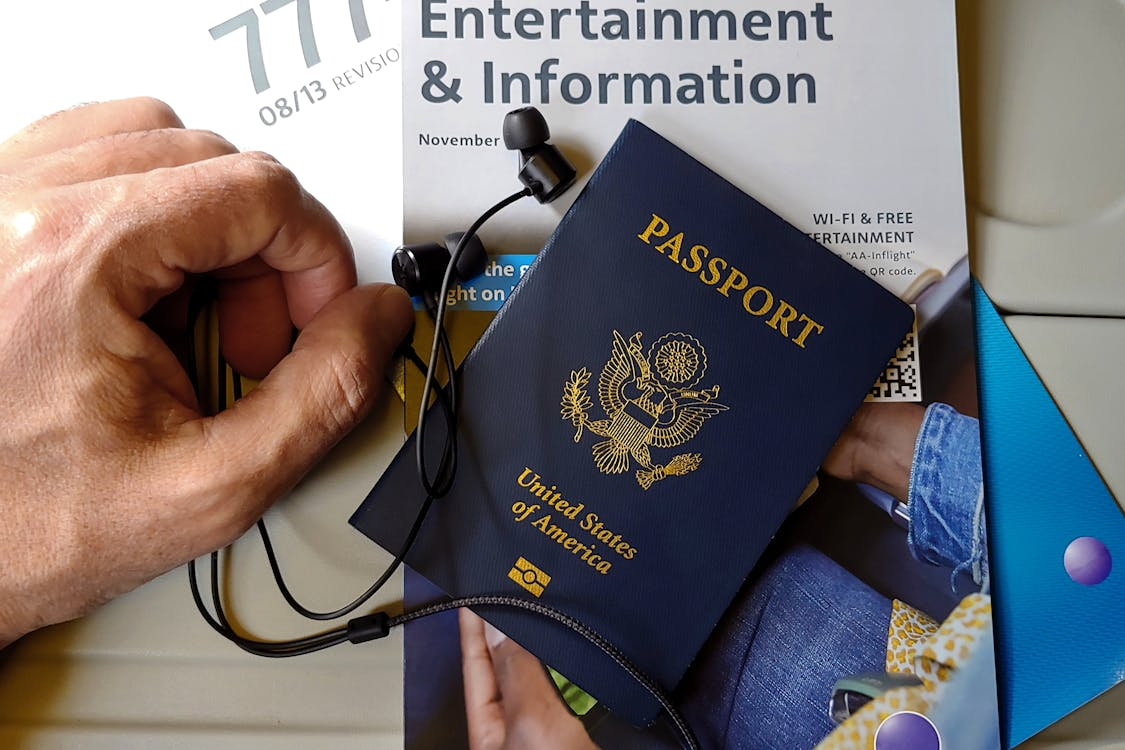
- Passport or government ID
- Boarding passes (digital or printed)
- Travel insurance information
- Credit cards and cash (at least two different cards)
- Copies of important documents (physical and digital)
- Travel itinerary and hotel confirmations
- Emergency contacts list
Comfort Items:
- Travel pillow
- Eye mask and earplugs
- Empty reusable water bottle
- Snacks (protein bars, nuts, crackers)
- Hand sanitizer and disinfecting wipes
- Lip balm and face mist
- Light scarf or wrap (serves multiple purposes)
Packing Organization:
- Packing cubes or compression bags
- Shoe bags
- Laundry bag for dirty clothes
- Small daypack or tote (serves as personal item)
Packing Tips and Strategies
How you pack matters as much as what you pack. These strategies maximize space and keep your belongings organized throughout your trip:
- Choose coordinating colors: Stick to a neutral color palette (black, navy, gray, beige) so every top matches every bottom. Add one or two accent colors for variety without requiring extensive outfit planning.
- Wear bulky items while traveling: Your heaviest shoes, thickest jacket, and bulkiest pants should be worn during your journey to save valuable bag space.
- Select quick-drying, wrinkle-resistant fabrics: Materials like merino wool, synthetic blends, and performance fabrics reduce laundry needs and stay presentable. Natural fibers like cotton and linen breathe well but wrinkle easily.
- Use solid toiletries when possible: Solid shampoo bars, soap bars, and crystal deodorant don’t count toward liquid limits and last longer than travel-sized bottles. Many hotels provide basic toiletries, so skip items you can use from hotel supplies.
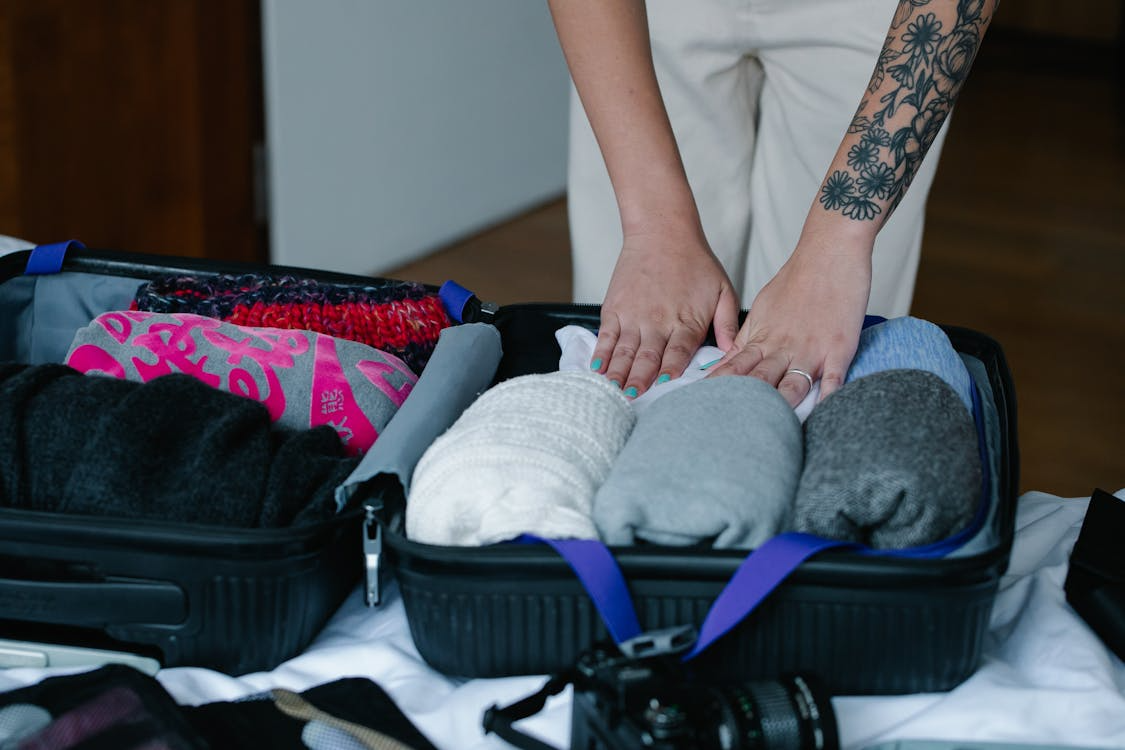
- Roll clothes instead of folding: Rolling minimizes wrinkles and maximizes space. Place heavier items like shoes at the bottom near the wheels, with lighter clothing on top.
- Pack electronics in your personal item: Keep devices accessible during flights and prevent damage. Place laptops and tablets in easy-to-reach spots since TSA requires removing them for screening.
- Organize with packing cubes: Separate items by category and compress clothing to fit more in your bag.
- Plan for laundry on longer trips: For trips over a week, doing laundry once extends your wardrobe significantly. Pack travel laundry detergent sheets or use hotel laundry services.
Seasonal Adjustments to Your Packing List
Different climates require specific modifications to the basic carry-on packing list while maintaining the compact approach.
Summer/warm weather adjustments:
- Replace long pants with shorts and lightweight trousers
- Pack tank tops and short-sleeve shirts
- Include swimwear if you’ll be near water
- Bring a sun hat and sunglasses
- Add sandals as one of your shoe options
- Include sunscreen and after-sun lotion (in TSA-compliant sizes)
Winter/cold weather adjustments:
- Wear your heaviest coat, boots, and scarf during travel to save bag space
- Pack thermal base layers that work as pajamas and under-layers
- Include gloves, a warm hat, and a scarf
- Bring wool socks and warm leggings
- Choose one warm sweater or fleece as a layering piece
- Add hand and foot warmers for extremely cold destinations
For transitional seasons, layers become even more critical. Pack items that work together to create various warmth levels. A tank top, long-sleeve shirt, cardigan, and light jacket can combine in multiple ways to handle temperatures ranging from cool mornings to warm afternoons.
Pack Your Carry-On Smart and Travel Light
Opting for a carry-on instead of checking larger luggage isn’t just about baggage fees. Carry-on travelers move through airports quickly, catch earlier flights without worrying about checked luggage, and eliminate the anxiety of lost bags. With the 5-4-3-2-1 method, strategic packing choices, and smart organization, you can fit everything needed for trips of any length in a single carry-on bag for stress-free travel.
Ready to plan your next adventure? Find and book your hotel using the HotelsOne booking platform.
HotelsOne is a premier reservation booking platform that allows you to browse over 400,000 hotels worldwide. Enjoy hassle-free, secure booking with discounted rates and no reservation fees! For more information on booking and customer support, check out our FAQs page.